Acetylcholinesterase inhibition, antioxidant and chemo-profile values of Xylopia aethiopica fruit and Corchorus olitorius leaf: preliminary neurological dysfunction protection evaluation
Inhibition de l'acétylcholinestérase, activité antioxydante et profil chimique du fruit de Xylopia aethiopica et de la feuille de Corchorus olitorius : évaluation préliminaire de la protection contre les dysfonctionnements neurologiques
DOI:
https://doi.org/10.82351/wajp.vol37no1.442Keywords:
inhibition cognitive impairment, acetylcholinesterase, Corchorus olitorius, Xylopia aethiopica, Neuroprotection, troubles cognitifs, inhibition de l'acétylcholinestéraseAbstract
Background: Xylopia aethiopica fruit (XY) and Corchorus olitorius (COR) leaf are common food-herbs in Nigeria used in the management of convulsion and enhancement of learning.
Objective: The study aims to evaluate the cognitive dysfunction and neuro- protection profile of the 2 food-herbs and their solvent fractions.
Method: The phytoconstituent profiles of XY and COR were evaluated using Gas chromatography-Mass spectrometry (GC-MS). The antioxidant effects of the crude extracts were determined using 1, 1-diphenyl-2- picryl-hydrazyl (DPPH) radical scavenging assay. An in vitro method, Ellman's colorimetric acetylcholinesterase inhibitory (AChE) assay was used to evaluate the cognitive enhancing/neuroprotective potentials of the plant crude extracts and fractions.
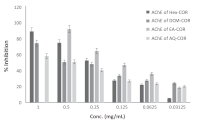
Results: The GC-MS study of X. aethiopica and C. olitorius extracts showed that some contained phytocompounds have been documented to possess anti-convulsive, sedative, anti-inflammation and hypnotic effects. The standard drug, eserine showed statistically higher antioxidant and acetylcholinesterase inhibitory effects compared to C. olitorius leaf and X. aethiopica fruit crude extracts. Only the AChE IC , obtained for C. olitorius 50 ethyl acetate fraction (0.18 mg/mL) was lower than its crude extract value. While, the acetylcholinesterase inhibitory activities (IC ), of all X. aethiopica fruit fractions were better than that of their crude extract.
Conclusion: The findings of this study suggest that the two nutritional food-herbs enhance cognitive ability and are possible agents in the management of degenerative impairments.
Résumé
Contexte: Le fruit de Xylopia aethiopica (XY) et la feuille de Corchorus olitorius (COR) sont des herbes alimentaires courantes au Nigeria utilisées pour la prise en charge des convulsions et l'amélioration des capacités d'apprentissage.
Objectif: Cette étude vise à évaluer les troubles cognitifs ainsi que le profil neuroprotecteur de ces deux plantes alimentaires et de leurs fractions obtenues par solvants.
Méthode: Les profils phytochimiques de XY et COR ont été analysés par chromatographie en phase gazeuse couplée à la spectrométrie de masse (GC-MS). Les effets antioxydants des extraits bruts ont été déterminés par le test de piégeage du radical 1,1-diphényl-2-picrylhydrazyle (DPPH). L'inhibition de l'acétylcholinestérase (AChE) a été évaluée in vitro par le test colorimétrique d'Ellman afin de déterminer les potentiels d'amélioration cognitive et de neuroprotection des extraits bruts et des fractions de la plante. Résultats: L'analyse GC-MS des extraits de X. aethiopica et C. olitorius a révélé la présence de certains composés phytochimiques déjà documentés pour leurs propriétés anticonvulsivantes, sédatives, anti-inflammatoires et hypnotiques. Le médicament de référence, l'ésérine, a présenté des effets antioxydants et inhibiteurs de l'acétylcholinestérase statistiquement supérieurs à ceux des extraits bruts de feuilles de Cyprinus olitorius et de fruits de Xanthomonas aethiopica. Seule la valeur CI de l'AChE, obtenue pour la fraction d'acétate d'éthyle de 50 Cyprinus olitorius(0,18 mg/mL), était inférieure à celle de l'extrait brut. En revanche, toutes les fractions de fruits de Xanthomonas aethiopica présentaient une meilleurs activité inhibitrice de l'acétylcholinestérase (IC ) par 50 rapport à leur extrait brut.
Conclusion: Les résultats suggèrent que ces deux plantes alimentaires possèdent des propriétés d'amélioration cognitive et pourraient constituer des agents potentiels dans la prise en charge des troubles neurodégénératifs.
Downloads
References
1. Ball N, Teo WP, Chandra S, Chapman J (2019). Parkinson's disease and the environment. Frontiers in Neurology, 10. 421551.
2. Rosin ER, Blasco D, Pilozzi AR, Yang LH, Huang X (2020). A narrative review of Alzheimer's disease stigma. Journal of Alzheimer's Disease, 78(2): 515- 528.
3. Ayeni EA, Gong Y, Yuan H, Hu Y, Bai X, Liao, X (2021). Medicinal plants for antineurodegenerative diseases in West Africa. Journal of Ethnopharmacology, doi: https://doi.org/10.1016/j.jep.2021.114468.
4. John CC, Bangirana P, Byarugaba J, Opoka RO, Idro R, Jurek AM, Wu B, Boivin MJ, (2008). Cerebral malaria in children is associated with long-term cognitive impairment. Pediatrics. 122, e92-99.
5. Che I, Clarke SE, Gosling R, Hamainza B, Killeen G, Magill A, O?Meara W, Price RN, Riley EM (2016). Asymptomatic" Malaria: A chronic and debilitating infection that should be treated. PLoS Medicine, 13 (1): e1001942.
6. Elufioye TO, Tomayo IB, Solomon H (2017). Plantsderived neuroprotective agents: cutting the cycle of cell death through multiple mechanisms. Journal of Evidence-Based Complementary & Alternative Medicine, 2017: 3574012.
7. Paolo MD, Papi L, Gori F, Turillazzi E (2019). Natural products in neurodegenerative diseases: a great promise but an ethical challenge. International Journal of Molecular Sciences, 20: 5170.
8. Orhan IE, 2013. Nature: A Substantial Source of Auspicious Substances with Acetylcholinesterase Inhibitory Action. Current Neuropharmacology, 11(4): 379-387.
9. Trang A, Khandhar PB (2023). Physiology, Acetylcholinesterase. In StatPearls. StatPearls Publishing.
10. Coelho F, Birks J (2001). Physostigmine for Alzheimer's disease. The Cochrane database Systematic Reviews, (2): 4D001499. https://doi.org/10.1002/14651858.CD001499
11. Oh MH, Houghton PJ, Whang WK, Cho JH (2004). Screening of Korean herbal medicines used to improve cognitive function for anti-cholinesterase activity. Phytomedicine : International Journal of Phytotherapy and Phytopharmacology, 11(6): 544-548.
12. Ishola IO, Ikuomola BO, Adeyemi, OO (2018). Protective Role of Spondias mombin Leaf and Cola acuminata seed extracts against scopolamine induced cognitive dysfunction. Alexandria Journal of Medicine, 54: 27-39.
13. Abolaji OA, Adebayo AH, Odesanmi OS, (2007). Nutritional qualities of three medicinal plant parts (Xylopia aethiopica, Blighia sapida and Parinari polyandra) commonly used by pregnant women in the Western part of Nigeria. Pakistan Journal of Nutrition, 6 (6): 665-668.
14. Yin X, Chávez León, MASC, Osae R, Linus LO, Qi LW, Alolga RN (2019). Xylopia aethiopica Seeds from Two Countries in West Africa Exhibit Differences in Their Proteomes, Mineral Content and Bioactive Phytochemical Composition. Molecules, (Basel, Switzerland), 24(10): 1979.
https://doi.org/10.3390/molecules24101979
15. Larayetan R, (2021). Antimalarial, antitrypanosomal, antimicrobial activities and volatile oil profile of Xylopia aethiopica (Dunal) Rich ( Annonaceae). Letters in Applied NanoBioScience, 11 (3): 3897-3908,
16. Anyamele T, Nnaemeka P, Amadike E, Ibe C (2022). Bioorganic chemistry phytochemical composition, bioactive properties, and toxicological profile of Tetrapleura tetraptera. Bioorganic Chemistry, 131 (2023): Article 106288, 10.1016/j.bioorg.2022.1062883
17. Onyebuagu PC, Kiridi K, Aloamaka CP (2014). Effect of Dietary Xylopia aethiopica on the Gonads of Male Wistar Rats. International Journal of Herbs and Pharmacological Research, 3: 40-45.
18. Islam MM (2013). Biochemistry, medicinal and food values of jute (Corchorus capsularis L. and C. olitorius L.) leaf: a review. International Journal of Enhanced Research in Science Technology & Engineering 2: 135-144.
19. Abdel-Razek MAM, Abdelwahab MF, Abdelmohsen UR, Hamed ANE (2022). Pharmacological and phytochemical biodiversity of Corchorus olitorius. RSC Advances, 12(54): 35103-35114.
20. Bonnot E, Claux O, Boulkout M, Rolland-Sabaté A, Abert-Vian M (2025). Chemical and nutritional profile of Tunisian Corchorus olitorius leaves: a valuable, under-exploited leafy vegetable. Journal of Food Science and Technology, 232: 118393, ISSN 0023-6438, https://doi.org/10.1016/j.lwt.2025.118393.
21. Oboh G, Raddatz H, Henle T (2009). Characterization of the antioxidant properties of hydrophilic and lipophilic extracts of Jute (Corchorus olitorius) leaf. International Journal of Food Sciences and Nutrition, 60 (Suppl 2), 124-134.
22. Abdel-Razek MAM, Abdelwahab MF, Abdelmohsen UR, Hamed ANE. (2022) Pharmacological and phytochemical biodiversity of Corchorus olitorius. RSC Advances., 12(54):35103-35114.
23. Biswas A, Dey S, Huang S, Deng Y, Birhanie ZM, Zhang J, Akhter D, Liu L, Li D (2022). A Comprehensive Review of C. capsularis and C.
olitorius: A Source of Nutrition, Essential Phytoconstituents and Pharmacological Activities. Antioxidants (Basel, Switzerland) 11 (7): 1358.
https://doi.org/10.3390/antiox11071358
24. Ellman GL, Courtney KD, Andres VJR, Feather-stone RM, (1961). A new and rapid colorimetric determination of Acetylcholinesterase activity.
Biochemical Pharmacology, 7: 88-95.
25. Marston A, Kissling J, Hostettmann KA (2002). Rapid TLC bioautographic method for the detection of acetylcholinesterase and butyrylcholinesterase inhibitors in plants. Phytochemical Analysis, 13: 51-54.
26. Sofowora AE (1993). Medicinal plants and traditional medicines in Africa. 2nd Edition. Spectrum Books, Ibadan, Nigeria. 1993: 289.
27. Mensor LL, Menezes FS, Leitao GG, Reis AS, Santos TC, Coube C, Leitao SG (2001). Screening of Brazilian plant extracts for antioxidant activity by the use of DPPH free radical method. Phytotherapy Research, 15 (2): 127-130.
28. Jung HA, Jung YJ, Hyun SK, Min BS, Kim DW, Jung JH, Choi JS (2010). Selective cholinesterase inhibitory activities of a new monoterpene diglycoside and other constituents from Nelumbo nucifera stamens. Biological and Pharmaceutical Bulletin, 33: 267-272.
29. Mbaoji FN, Ezike AC, Nworu CS, Onyeto CA, Nwabunike IA, Okoli IC, Akah PA (2016). Antioxidant and hepatoprotective potentials of
Stemonocoleus micranthus harms (Fabaceae) stem bark extract. International Journal of Pharmacy and Pharmaceutical Sciences, 8 (7): 47-51.
30. Orabueze IC, Ota DA, Coker HA (2020). Antimalarial potentials of Stemonocoleus micranthus Harms (leguminoseae) stem bark in Plasmodium berghei infected mice. International Journal of Pharmacy and Pharmaceutical Sciences, 10(1): 70 - 78.
31. Ruth, Lidji Casilde Jessica Sintes, Bolou Gbouhoury Eric-Kevin, Konan Gbê Kouakou N'Dri Ange, N'guessan JD (2023). Evaluation of Acute Toxicity and Phytochemical Analysis of Gliricidia Sepium and Xylopia aethiopica Extracts. European Journal of Medicinal Plants 34 (11):1-9.
32. Murray AP, Faraoni MB, Castro MJ, Alza NP, Cavallaro V (2013). Natural AChE Inhibitors from Plants and their Contribution to Alzheimer's Disease Therapy. Current Neuropharmacology, 11 (4): 388-413.
33. Jazayeri SB, Amanlou A, Ghanadian N, Pasalar P, Amanlou MA (2014). Preliminary investigation of anticholinesterase activity of some Iranian medicinal plants commonly used in traditional medicine. DARU Journal of Pharmaceutical Sciences, 22 (1): 17. https://doi.org/10.1186/2008-2231-22-17
34. Okereke SC, Arunsi UO, Nosiri CI (2017). GC-MS/FTIR screening of Xylopia aethiopica (Dunal) A. rich fruit. African Journal of. Biochemistry Research, 11 (3), 12-17.
35. Okagu I, Ngwu U, Odenigbo C (2018). Bioactive Constituents of Methanol Extract of Xylopia aethiopica (UDA) Fruits from Nsukka, Enugu State, Nigeria. Open Access Library Journal. 5: 1-11.
36. Tegang AS, Beumo TM, Dongmo PM, Ngoune LT (2018). Essential oil of Xylopia aethiopica from Cameroon: Chemical composition, antiradical and in vitro antifungal activity against some Mycotoxigenic Fungi. Journal of King Saud University - Science, 30:466 - 741.
37. Ezealisiji KM, Okoh PT (2023). Advanced phytochemistry and chemo-metric profiling of the bioactive medicinal components of n-hexane seed extract of Xylopia aethiopica using FTIR and GC-MS techniques. GSC Biological and Pharmaceutical Sciences, 22(01): 247-256.
38. Gonzalez-Rivera ML, Barragan-Galvez JC, GascaMartínez D, Hidalgo-Figueroa S, Isiordia-Espinoza M, Alonso-Castro AJ (2023). In vivo
Neuropharmacological Effects of Neophytadiene. Molecules, 28 (8): 3457. https://doi.org/10.3390/molecules28083457
39. Hu H, Sun XO, Tian F, Zhang H, Liu Q, Tan W, (2016). Neuroprotective Effects of Isosteviol Sodium Injection on Acute Focal Cerebral Ischemia in Rats. Oxidative Medicine and Cellular Longevity, 1379162. https://doi.org/10.1155/2016/1379162
40. Maden M (2007). Retinoic acid in the development, regeneration and maintenance of the nervous system. Nature Reviews Neuroscience, 8 (10): 755- 765.
41. Ademosun AO, Oboh G, Bello F, Ayeni PO (2016). Antioxidative properties and effect of quercetin and its glycosylated form (rutin) on acetylcholinesterase and butyrylcholinesterase activities. Evidence-Based Complementary and Alternative Medicine, 21 (4): NP11-NP17. doi:10.1177/2156587215610032
42. Senol FS, Orhan I, Yilmaz G, Cicek M, Sener B (2010). Acetylcholinesterase, butyrylcholinesterase, and tyrosinase inhibition studies and antioxidant activities of Scutellaria L. Taxa from Turkey. Food and Chemical Toxicology, 48: 781-788
43. Nwidu LL, Ekramy E, Jack T, Buddhika W, Anusha W, Rebecca T, Averil W, Wayne GC (2017). Antiacetylcholinesterase activity and antioxidant
properties of extracts and fractions of Carpolobia lutea. Pharmaceutical Biology, 55: 1875 - 1883
44. Abubakar MU, Abubakar D, (2021). Characterization of Acetylcholinesterase from Various Sources: A Mini Review. Journal of Environmental Bioremediation and Toxicology 4(1): 24-30.
45. Singh SK, Srivastav S, Castellani RJ, Plascencia-Villa G, Perry G (2019). Neuroprotective and Antioxidant Effect of Ginkgo biloba Extract Against AD and Other Neurological Disorders. Neurotherapeutics: The Journal of the American Society for Experimental NeuroTherapeutics, 16(3): 666-674.
46. Malomo SA, Aluko RE (2016). In vitro acetylcholinesterase-inhibitory properties of enzymatic hemp seed protein hydrolysates. The
Journal of the American Oil Chemists' Society., 93: 411-420.
47. Trang A., Khandhar PB (2023). Physiology, Acetylcholinesterase. In StatPearls. StatPearls Publishing.
48. Alhawarri MB, Dianita R, Rawa MSA, Nogawa T, Wahab HA (2023). Potential Anti-Cholinesterase Activity of Bioactive Compounds Extracted from Cassia grandis L.f. and Cassia timoriensis DC. Plants 12: 344. https://doi.org/10.3390/plants12020344
49. Sanabria-Castro A, Alvarado-Echeverría I, MongeBonilla C (2017). Molecular pathogenesis of Alzheimer's disease: an update. Annals of
Neurosciences, 24(1): 46-54.
50. Nwanna EE, Oyeleye SI, Ogunsuyi OB, Oboh G, Boligon AA, Atha M, (2016). In vitro neuroprotective properties of some commonly consumed green leafy vegetables in Southern Nigeria. International Journal of Food Sciences and Nutrition, 2: 19-24.
51. Ahmad S, Ullah F, Ayaz M, Sadiq A, Imran M (2015). Antioxidant and anticholinesterase investigations of Rumex hastatus D. Don: potential effectiveness in oxidative stress and neurological disorders. Biological Research, 48: 1-8.
52. Ogunsuyi OB, Ademiluyi AO, Oboh G (2020). Solanum leaves extracts exhibit antioxidant properties and inhibit monoamine oxidase and
acetylcholinesterase activities (in vitro) in Drosophila melanogaster. Journal of Basic and Clinical Physiology and Pharmacology, 31(3), 421-432.
53. Oboh G, Atoki AV, Ademiluyi AO, Ogunsuyi OB (2023). African Jointfir (Gnetum africanum) and Editan (Lasianthera africana) leaf alkaloid extracts exert antioxidant and anticholinesterase activities in fruit fly (Drosophila melanogaster). Food Science & Nutrition, 11(6): 2708-2718.
54. Sulaimon LA, Adisa RA, Obuotor EM, Lawal MO, Moshood AI, Muhammad NH (2020). Chemical composition, antioxidant, and anticholineesterase activities of essential oil of Xylopia aethiopica seeds. Pharmacognosy Research 12:112-118
55. Koomson AE, Kukuia KKE, Amoateng P, Biney RP, Tagoe TA, Mensah JA, Ameyaw EO, Torbi J, Amponsah SK, (2022). Extract of Xylopia aethiopica and its kaurene diterpene, xylopic acid, improve learning and memory in mice. IBRO Neuroscience Reports 12: 249-259.
56. Sosa-Sequera MC, Suarez O, Dalo NL (2010). Kaurenic acid: An in vivo experimental study of its anti-inflammatory and antipyretic effects. Indian Journal of Pharmacology, 42: 293-296.
57. Ameyaw EO, Woode E, Boakye-Gyasi E, Abotsi WKM, Kyekyeku, JO, Adosraku RK (2014). Antiallodynic and Anti-hyperalgesic effects of an
ethanolic extract and xylopic acid from the fruits of Xylopia aethiopica in murine models of neuropathic pain. Pharmacognosy Research, 6: 172-179.
58. Klafki HW, Staufenbiel M, Kornhuber J, Wiltfang J (2006). Therapeutic approaches to Alzheimer's disease.Brain, 129 (11): 2840-2855.
Published
Issue
Section
License
Copyright (c) 2026 West African Journal of Pharmacy

This work is licensed under a Creative Commons Attribution-NonCommercial-NoDerivatives 4.0 International License.