

Dimethyl fumarate attenuates scopolamine induced amnesia and oxidative stress in mice
Article Sidebar
Abstract Views | PDF/EPUB Downloads
238
/ 77
Main Article Content
Abstract
Background: Memory and cognition, processes essential for adaptation and survival of organisms can be impaired by oxidative stress resulting from high amounts of reactive oxygen species in the brain. Dimethyl fumarate (DMF) is an immunomodulatory, antioxidant and anti-inflammatory agent currently used for management of remitting relapsing multiple sclerosis.
Objective: In this study, we seek to evaluate the effect of DMF in scopolamine induced amnesia and oxidative stress in a murine model of cognition and memory.
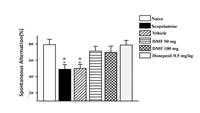
Methods: The effect of DMF on scopolamine induced amnesia in mice following acute and chronic treatment was evaluated using the Y-maze spontaneous alternation performance test as neurobehavioural test index. Levels of catalase, glutathione and malondialdehyde as determinants of brain oxidative stress were determined in isolated brain tissues following chronic treatment with DMF. Dimethyl sulphoxide solution was used as the control drug (vehicle) while donepezil was used as the reference memory enhancing agent.
Results: DMF significantly (p<0.05) improved spontaneous alternation performance in the Y-maze test, post acute and chronic drug administration. Levels of catalase and glutathione in isolated brain tissues were significantly increased (p<0.05) following treatment with DMF while lipid peroxidation products indicated by malondialdehyde levels were significantly decreased (p<0.05).
Conclusion: The results obtained suggest that DMF improves scopolamine induced memory and cognitive deficits and ameliorates oxidative stress in the brain.
Downloads
Article Details
Issue
Section

This work is licensed under a Creative Commons Attribution-NonCommercial-NoDerivatives 4.0 International License.
How to Cite
Share
References
1. Dunning J and Matthew JD (2004). Molecular mechanisms of learning and memory. Expert Review in Molecular Medicine 25(5): 1–11.
2. Martin JB (1980). Molecular basis of the neurodegenerative disorders. New England Journal of Medicine 340: 1970–1980.
3. Schliebs R and Arendt T (2011). The cholinergic system in aging and neuronal degeneration. Behavioural Brain Research 221: 555–563.
4. Murrough JW, Iacoviello B, Neumeister A, Charney DS and Iosifescu DV (2011). Cognitive dysfunction in depression: neurocircuitry and new therapeutic strategies. Neurobiology of Learning and Memory 96: 553–563.
5. Darcet F, Mendez-David I, Tritschler L, Gardier AM, Guilloux J and David DJ (2014). Learning and memory impairments in a neuroendocrine mouse model of anxiety/depression. 8: 136–156.
6. Baune BT, Malhi GS, Morris G, Outhred T, Hamilton A, Das P, Bassett D, Boyce P, Lyndon B, Mulder R, Parker G and Singh AB (2017). Cognition in depression: Can we THINC-it better? Journal of Affective Disorders 225: 559–562.
7. Klinkenberg I and Blokland A (2010). The validity of scopolamine as a pharmacological model for cognitive impairment: A review of animal behavioural studies. Neuroscience and Biobehavioural Reviews 34: 1307–1350.
8. Lian W, Fang J, Xu L, Zhou W, Kang X, Xiong W, Jia H, Liu AL and Du GH (2017). DL0410 ameliorates memory and cognitive impairments induced by scopolamine via increasing cholinergic neurotransmission in mice. Molecules 22(3). doi: 10.3390/molecules22030410.
9. Ray CA, Blin J, Chase TN and Piercey MF (1992). Effects of cholinergic agonists on regional brain energy metabolism in scopolamine-treated rats. Neuropharmacology 31: 1193–1199.
10. Fan Y, Hu J, Li J, Yang Z, Xin X, Wang J, Ding J and Geng M (2005). Effect of acidic oligosaccharide sugar chain on scopolamine-induced memory impairment in rats and its related mechanisms. Neuroscience Letters 374: 222–226.
11. Jeong EJ, Lee KY, Kim SH, Sung SH and Kim YC (2008). Cognitive-enhancing and antioxidant activities of iridoid glycosides from Scrophularia buergeriana in scopolamine-treated mice. European Journal of Pharmacology 588(1): 78–84.
12. Pachauri SD, Tota S, Khandelwal K, Verma PR, Nath C, Hanif K, Shukla R, Saxena JK and Dwivedi AK (2012). Protective effect of fruits of Morinda citrifolia L. on scopolamine induced memory impairment in mice: a behavioural, biochemical and cerebral blood flow study. Journal of Ethnopharmacology 139(1): 34–41.
13. Shulman RG, Rothman DL, Behar KL and Hyder F (2004). Energetic basis of brain activity: implications for neuroimaging. Trends in Neuroscience 27: 489–495.
14. Uttara B, Singh AV, Zamboni P and Mahajan RT (2009). Oxidative stress and neurodegenerative diseases: a review of upstream and downstream antioxidant therapeutic options. Current Neuropharmacology 7: 65–74.
15. Umukoro S, Ugbomah AI, Aderibigbe A and Omogbiya A (2013). Antioxidant property of jobelyn as the possible mechanism underlying its anti-amnesic activity in rodents. Basic Clinical Neuroscience 4(1): 42–49.
16. Lee B, Cao R, Choi YS, Cho HY, Rhee AD, Hah CK, Hoyt KR and Obrietan K (2009). The CREB/CRE transcriptional pathway: protection against oxidative stress-mediated neuronal cell death. Journal of Neurochemistry 108(5): 1251–1265.
17. Lee JS, Kim HG, Lee HW, Han JM, Lee SK, Kim DW, Saravanakumar A and Son CG (2015). Hippocampal memory enhancing activity of pine needle extract against scopolamine-induced amnesia in mice. Scientific Reports 5: 9651. doi: 10.1038/srep09651.
18. Ishola OI, Adamson FM and Adeyemi OO (2017). Ameliorative effect of kolaviron against scopolamine-induced memory impairment in rats: role of antioxidant defense system. Metabolic Brain Disease 32: 235–245.
19. Iniaghe LO, Krafft PR, Klebe DW, Omogbai EKI, Zhang JH and Tang J (2015). Dimethyl fumarate confers neuroprotection via Nrf2 signaling in murine intracerebral haemorrhage. Neurobiology of Disease 82: 349–358.
20. Kunze R, Urrutia A, Hoffmann A, Liu H, Helluy X, Pham M, Reischl S, Korff T and Marti HH (2015). Dimethyl fumarate attenuates cerebral oedema formation by protecting blood-brain barrier integrity. Experimental Neurology 266: 99–111.
21. Zhao X, Sun G, Zhang J, Ting S, Gonzales N and Aronowski J (2015). Dimethyl fumarate protects brain from intracerebral haemorrhage via Nrf2 mechanism. Stroke 46: 1923–1928.
22. Kume T, Suenaga A, Izumi Y and Akaike A (2016). Protective effect of dimethyl fumarate on oxidative stress model induced by sodium nitroprusside in mice. Biological and Pharmaceutical Bulletin 36(6): 1055–1059.
23. Albrecht P, Bouchachia I, Goebels N, et al. (2012). Effects of dimethyl fumarate on neuroprotection and immunomodulation. Journal of Neuroinflammation 9: 163.
24. Scannevin RH, Chollate S, Jung MY, et al. (2012). Fumarates promote cytoprotection via Nrf2 pathway. Journal of Pharmacology and Experimental Therapeutics 341: 274–284.
25. Public Health Service Policy on Humane Care and Use of Laboratory Animals (2015). National Institutes of Health, USA.
26. Kaur R, Mehan S, Khanna D and Kalra S (2015). Ellagic acid ameliorates scopolamine-induced memory dysfunction. Austin Journal of Clinical Neurology 2(6): 1053.
27. Heo HJ, Park YJ, Suh YM, et al. (2003). Effects of oleamide on choline acetyltransferase and cognitive activities. Bioscience, Biotechnology and Biochemistry 67: 1284–1291.
28. Akanmu MA, Olowookere TO, Atunwa SA, et al. (2011). Neuropharmacological effects of Nigerian honey in mice. African Journal of Traditional Complementary and Alternative Medicine 8: 230–249.
29. Lowry OH, Rosebrough NJ, Farr AL and Randall RJ (1951). Protein measurement with Folin phenol reagent. Journal of Biological Chemistry 193: 265–275.
30. Ellman GL, Courtney KD, Andres V Jr and Featherstone RM (1961). A new and rapid colorimetric determination of acetylcholinesterase activity. Biochemical Pharmacology 7: 88–95.
31. Claiborne A (1985). Catalase activity. CRC Handbook of Methods for Oxygen Radical Research.
32. Ellman GL (1959). Tissue sulfhydryl groups. Archives of Biochemistry and Biophysics 82: 70–77.
33. Wills ED (1966). Mechanism of lipid peroxide formation in animal tissues. Biochemical Journal 99: 667–676.
34. Hooper N, Fraser C and Stone T (1996). Effects of purine analogues on spontaneous alternation in mice. Psychopharmacology 123: 250–257.
35. El-Sherbiny DA, Khalifa AE, Attia AS and Eldenshary EES (2003). Hypericum perforatum antioxidant properties against scopolamine-induced oxidative stress. Pharmacology Biochemistry and Behavior 76: 523–533.
36. Blokland A (2005). Scopolamine-induced cognitive deficits: review of animal studies. Reviews in the Neurosciences 16: 71–76.
37. Lee M, Yun B, Zhang D, et al. (2010). Aqueous antler extract improves scopolamine-induced memory impairment. Food Science and Biotechnology 19: 655–661.
38. Mann H, McCoy MT, Subramaniam J, Van Remmen H and Cadet JL (1997). Overexpression of antioxidant enzymes in neural cells. Brain Research 770: 163–168.
39. Younes M and Siegers CP (1981). Lipid peroxidation following glutathione depletion. Chemico-Biological Interactions 34: 257–266.
40. Lobo V, Patil A, Phatak A and Chandra N (2010). Free radicals and antioxidants: impact on health. Pharmacognosy Reviews 4: 118–126.
41. Su B, Wang X, Nunomura A, et al. (2008). Oxidative stress in Alzheimer’s disease. Current Alzheimer Research 5(6): 525–532.