

Prevalence of malaria among women attending a tertiary hospital in Sokoto metropolis, North-Western Nigeria
Article Sidebar
Abstract Views | PDF/EPUB Downloads
292
/ 96
Main Article Content
Abstract
Background: Nigeria currently has the second largest maternal mortality and highest transmission of malaria in the world. Approximately 9.2 million women and young girls who get pregnant annually in Nigeria are at risk of malaria in pregnancy (MIP). MIP is associated with adverse outcomes on both the mother and foetus.
Objective: To assess the prevalence of malaria among women attending a tertiary hospital within Sokoto metropolis.
Methods: The study was cross-sectional retrospective study. Records of women aged 15 years and above were extracted from the patient records (Jan – Dec, 2015) at Specialist Hospital Sokoto. Statistical analysis was performed using Chi-Squared test and risk ratio was calculated.
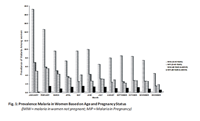
Result: A total of 71,384 women attended the hospital during the study period of which 10,408 were diagnosed to have malaria giving a prevalence of 14.6%. The prevalence was higher (p<0.05) among pregnant women, MIP (18.0%) than non-pregnant women, MIW (13.7%). The highest prevalence was recorded in the month of January (30.9%) while the lowest prevalence was seen in December with a prevalence of 8.2%.
Conclusion: The prevalence of malaria in the study population was 14% and pregnant women had a higher risk of malaria infection. A more robust prospective study is required to confirm the findings.
Downloads
Article Details
Issue
Section

This work is licensed under a Creative Commons Attribution-NonCommercial-NoDerivatives 4.0 International License.
How to Cite
Share
References
1. United Nations Millennium Project. Who they are. [Retrieved 2017 Aug 17]. Available from: http://www.unmillenniumproject.org/goals
2. Oleribe OO and Taylor-Robinson SD (2016). Before Sustainable Development Goals (SDG): why Nigeria failed to achieve the Millennium Development Goals (MDGs). Pan African Medical Journal 24: 156.
3. Izugbara CO, Wekesah FM and Adedini SA (2016). Maternal Health in Nigeria: A Situation Update. African Population and Health Research Center (APHRC), Nairobi, Kenya.
4. World Health Organization (2015). Trends in maternal mortality: 1990 to 2015. Estimates by WHO, UNICEF, UNFPA, World Bank Group and the United Nations Population Division. Geneva: World Health Organization.
5. Federal Ministry of Health (2011). National Policy on Malaria Diagnosis and Treatment. Federal Ministry of Health, National Malaria and Vector Control Division, Abuja, Nigeria.
6. World Health Organization (2014). World Malaria Report 2015. Geneva: World Health Organization.
7. Okpere EE, Enabudoso EJ and Osemwenkha AP (2010). Malaria in Pregnancy. Nigerian Medical Journal 51: 109–113.
8. Moya-Alvarez V, Abellana R and Cot M (2014). Pregnancy-associated malaria and malaria in infants: an old problem with present consequences. Malaria Journal 13: 271.
9. De Beaudrap P, Turyakira E, Nabasumba C, Tumwebaze B, Piola P, Boum II Y and McGready R (2016). Timing of malaria in pregnancy and impact on infant growth and morbidity: a cohort study in Uganda. Malaria Journal 15(1): 92.
10. Balogun ST, Adeyanju OA, Adedeji AA and Fehintola FA (2011). Predictors of asymptomatic malaria in pregnancy. Nigerian Journal of Physiological Sciences 26: 179–183.
11. Federal Ministry of Health (2014). National Malaria Strategic Plan 2014–2020. Abuja, Nigeria.
12. Ter Kuile FO, van Eijk AM and Filler SJ (2007). Resistance on the efficacy of intermittent preventive therapy. JAMA 297(23): 2603–2616.
13. World Health Organization (2015). Guidelines for the treatment of malaria (3rd ed.). Geneva: WHO.
14. Federal Ministry of Health (2011). National Policy on Malaria Diagnosis and Treatment. Abuja, Nigeria.
15. Oguche S, Okafor HU, Watila I, Meremikwu M, Agomo P, Ogala W, et al. (2014). Efficacy of artemisinin-based combination treatments of uncomplicated falciparum malaria in under-five-year-old Nigerian children. American Journal of Tropical Medicine and Hygiene 91(5): 25–35.
16. Aina OO, Agomo CO, Olukosi Y, Okoh HI, Iwalokun B and Egbuna KN (2013). Malariometric survey of Ibeshe community in Ikorodu, Lagos state: dry season. Malaria Research and Treatment 487250: 1–7.
17. Nwagha UI, Ugwu VO, Nwagha TU and Anyaehie BU (2009). Asymptomatic Plasmodium parasitemia in pregnant Nigerian women: almost a decade after Roll Back Malaria. Transactions of the Royal Society of Tropical Medicine and Hygiene 103: 16–20.
18. Ogbu GI, Aimakhu CO, Ajen Anzaku S, Ngwan S and Ogbu DA (2015). Prevalence of malaria parasitaemia among asymptomatic women at booking visit in a tertiary hospital, Northcentral Nigeria. Journal of Reproductive Biology and Health 3: 1.
19. Umaru ML and Uyaiabasi GN (2015). Prevalence of malaria in patients attending the General Hospital Makarfi, Kaduna State, North Western Nigeria. American Journal of Infectious Diseases and Microbiology 3(1): 1–5.
20. Agomo CO, Oyibo WA, Anorlu RI and Agomo PU (2009). Prevalence of malaria in pregnant women in Lagos, South-West Nigeria. Korean Journal of Parasitology 47(2): 179–183.
21. Isah AY, Amanabo MA and Ekele BA (2011). Prevalence of malaria parasitemia amongst asymptomatic pregnant women attending a Nigerian teaching hospital. Annals of African Medicine 10: 171–174.
22. Balogun ST, Fehintola FA and Adeyanju OA (2010). Asexual and sexual stages of Plasmodium falciparum in Nigerian pregnant women attending antenatal booking clinic. Obstetric Medicine 3(3): 106–109.
23. Aziken ME, Akubuo KK and Gharoro EP (2011). Efficacy of intermittent preventive treatment with sulfadoxine–pyrimethamine on placental parasitemia in pregnant women in midwestern Nigeria. International Journal of Gynecology and Obstetrics 112: 30–33.
24. Desai M, Kuile FO, Nosten F, McGready R, Asamoa K, Brabin B and Newman RD (2007). Epidemiology and burden of malaria in pregnancy. Lancet Infectious Diseases 7(2): 93–104.
25. Adeola AA and Okwilagwe EA (2015). Acceptance and utilisation of sulphadoxine-pyrimethamine and insecticide-treated nets among pregnant women in Oyo State, Nigeria. Malaria Research and Treatment 713987: 1–9.
26. Fehintola FA, Balogun ST and Adeoye SB (2012). Intermittent preventive treatment during pregnancy with sulphadoxine-pyrimethamine may promote Plasmodium falciparum gametocytogenesis. Medical Principles and Practice 21: 63–67.
27. Bouyou-Akotet MK, Issifou S, Meye JF, Kombila M, Ngou-Milama E, Luty AJ, et al. (2004). Depressed natural killer cell cytotoxicity against Plasmodium falciparum infected erythrocytes during first pregnancies. Clinical Infectious Diseases 38: 342–347.
28. Igunma Y, Ande A, Ezeanochie M and Hayes K (2010). Malaria in pregnancy: experience with intermittent preventive treatment in a university teaching hospital in southern Nigeria. Benin Journal of Postgraduate Medicine 12(1): 14–19.
29. Noedl H, Schaecher K, Smith BL, Socheat D and Fukuda MM (2008). Evidence of artemisinin-resistant malaria in western Cambodia. New England Journal of Medicine 359: 2619–2620.
30. Rogers JS, Wijesinghe SR and Meshnick RS (2010). Host immunity as a determinant of treatment outcome in Plasmodium falciparum malaria. Lancet Infectious Diseases 10: 51–59.
31. Iriemenam NC, Shah M, Gatei W, et al. (2012). Temporal trends of sulphadoxine-pyrimethamine drug-resistance molecular markers in Plasmodium falciparum parasites from pregnant women in western Kenya. Malaria Journal 11: 134.
32. Baraka V, Ishengoma DS, Francis F, Minja DTR, Madebe RA, Ngatunga D, Van Geertruyden J (2015). High-level Plasmodium falciparum sulfadoxine-pyrimethamine resistance with septuple haplotype in Tanzania. Malaria Journal 14: 439.
33. Aghedo FI, Shehu RA, Umar RA, Jiya MN and Erhabor O (2013). Antioxidant vitamin levels among preschool children with uncomplicated Plasmodium falciparum malaria in Sokoto, Nigeria. Journal of Multidisciplinary Healthcare 6: 259–263.
34. Erhabor O, Mohammad HJ, Onuigue FU, Abdulrahaman Y and Ezimah AC (2014). Anaemia and thrombocytopenia among malaria parasitized children in Sokoto, North Western Nigeria. Journal of Hematology & Transfusion 2(2): 1020.
35. CityPopulation.de (2018). Nigeria administrative divisions. https://www.citypopulation.de/php/nigeria-admin.php [Accessed: 13 February 2018].
36. Agomo CO, Oyibo WA and Odukoya-Maije F (2011). Parasitologic assessment of two-dose and monthly intermittent preventive treatment of malaria during pregnancy with sulphadoxine-pyrimethamine. Malaria Research and Treatment 932895.
37. Jimoh AO, Shehu CE, Panti AA, Sani Z, Abubakar K and Danzaki AM (2013). Antimalarial use in the management of malaria in pregnancy in a tertiary care setting in Sokoto, north western Nigeria. Caliphate Medical Journal 1: 2–3.
38. Tahita MC, Tinto H, Erhart A, Kazienga A, Fitzhenry R, Van Overmeir C, et al. (2015). Prevalence of dhfr and dhps mutations among pregnant women in rural Burkina Faso. PLoS ONE 10(9): e0137440.
39. Baraka V, Ishengoma DS, Francis F, Minja DTR, Madebe RA, Ngatunga D and Van Geertruyden J (2015). High-level Plasmodium falciparum sulfadoxine-pyrimethamine resistance in Tanzania. Malaria Journal 14: 439.
40. Oguike MC, Falade CO, Shu E, Enato IG, Watila I, Baba ES, et al. (2016). Molecular determinants of sulfadoxine-pyrimethamine resistance in Plasmodium falciparum in Nigeria. International Journal for Parasitology: Drugs and Drug Resistance 6(3): 220–229.